Steven Tee/Getty Images
What’s the secret to a perfect lap at Albert Park? We’ll get back to you on that...
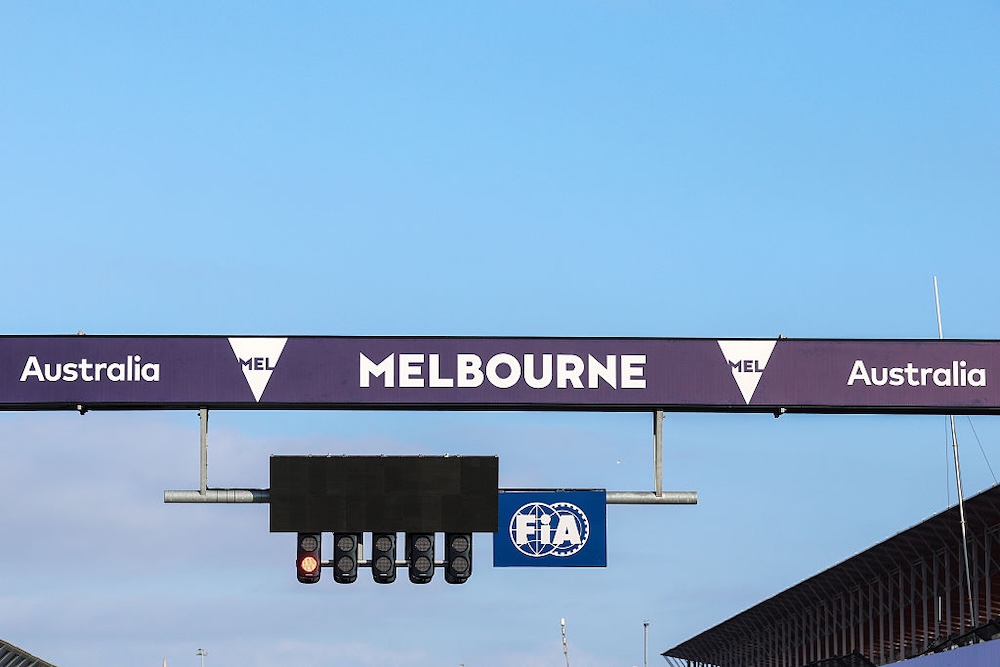
Last season we ran a series of F1 track guides courtesy of drivers and engineers who would talk us round a lap of each venue. Arriving at Albert Park of the season-opening race of 2026, the scenario is a little different for the teams due to brand-new regulations that leave a greater level of uncertainty over how the optimal lap will be approached.
“All the driving, car setup, everything is kind of optimized around getting the most out of the power unit,” McLaren's Oscar Piastri explained in Melbourne. “There’s always been an element of that, but it’s now by far the biggest element.
“You’ve still got to do all the other basics right. What is difficult about these new regulations is that a lot of the things we have to learn to do as drivers are not very intuitive, so it takes some getting used to and a lot of discipline.”
So, what is it that’s so different? Why can’t a driver just state how they will put together the quickest lap in Australia? It comes down to learning the new cars, and more specifically, the power unit usage to find the lap time.
"The deployment is the biggest part” Lewis Hamilton said. “The rest of it is all kind of similar and familiar, but the deployment is so challenging, and it’s different from track to track.
“We probably also won’t know until we’re thrown in the deep end in the race to understand, when we overtake someone, how it’s going to affect us coming out of that corner, and managing that is going to be difficult. Some tracks you don’t have to do lift and coast for a single lap, and in some places you have to do a lot of lift and coast for a qualifying lap.
“There can be a big difference between deployment, of a second. If you don’t lift in one corner, for example Turn 6, Turn 5 here – if you take it flat or if you lift, it has a massive compound effect through the rest of the lap.
“You can do a good lap, but you could be a second down because the deployment is off. That’s going to be the biggest challenge – not only the drivers optimizing it, but the team being on top of it and delivering.”
That means drivers are a little less inclined to state exactly what the car will need in Melbourne, because all of the teams are still learning what will be the optimal way of setting the car up and getting the time out of it.
“It's interesting because I think the cars themselves are lower priority in terms of set-up than what comes first, which is the deployment of the car and the tires,” Alex Albon said. “I think the tires are tricky because the deployment is tricky, but the deployment rules everything.
“We've seen in Melbourne, for example, I did sim work on Wednesday, Thursday last week, [but] even from all the simulation tools running the new calibration for FP1 is completely different. All the stuff you do on the simulator is valid to a point, but then also not valid.
“It's just about being adaptable. As a driver as well, you have to be so open-minded towards your driving style, your approach to race weekends and just having this efficiency focus in the back of your mind.”
Where 2026 differs from previous regulation changes is the introduction of a new skill.
“I see it like there's a driving side, which every driver since they're eight years old has always been taught to drive as fast as you can," Albon said. "And then there's the other side, which is learn how to be as efficient as you can. That side of things, unless you've been in a Formula E car, is new to most drivers.
“So the typical thing of sometimes you have to drive slower to go faster, it might be a gear selection, it might be a style, a different weight, approach of sequence of corners. It might be net slower in a vehicle grip dynamic, but in terms of an efficiency point of view, it's quicker.”
Carlos Sainz says some of the approaches are “very counterintuitive for a racing driver” as they sometimes have to think twice before going to the limits of grip, but that doesn’t mean those behind the wheel will not be pushing as they learn the approach on track at Albert Park.
“It's going to be on the edge but in a different way,” Sainz added. “I mean, we're going to find the limits of the car and of what we need to do. It's just in a different way to what maybe the limit was last year.
“How you execute that perfect lap is you execute it and we will be under the same pressure to execute it. It's just going to be making different compromises and it's how you adapt to that, I think.”
Chris Medland
While studying Sports Journalism at the University of Central Lancashire, Chris managed to talk his way into working at the British Grand Prix in 2008 and was retained for three years before joining ESPN F1 as Assistant Editor. After three further years at ESPN, a spell as F1 Editor at Crash Media Group was followed by the major task of launching F1i.com’s English-language website and running it as Editor. Present at every race since the start of 2014, he has continued building his freelance portfolio, working with international titles. As well as writing for RACER, his broadcast work includes television appearances on F1 TV and as a presenter and reporter on North America's live radio coverage on SiriusXM.
Read Chris Medland's articles
Latest News
Comments
Comments are disabled until you accept Social Networking Cookies. Update cookie preferences
If the dialog doesn't appear, ad-blockers are often the cause; try disabling yours or see our Social Features Support.